
Dark Night of the Soul
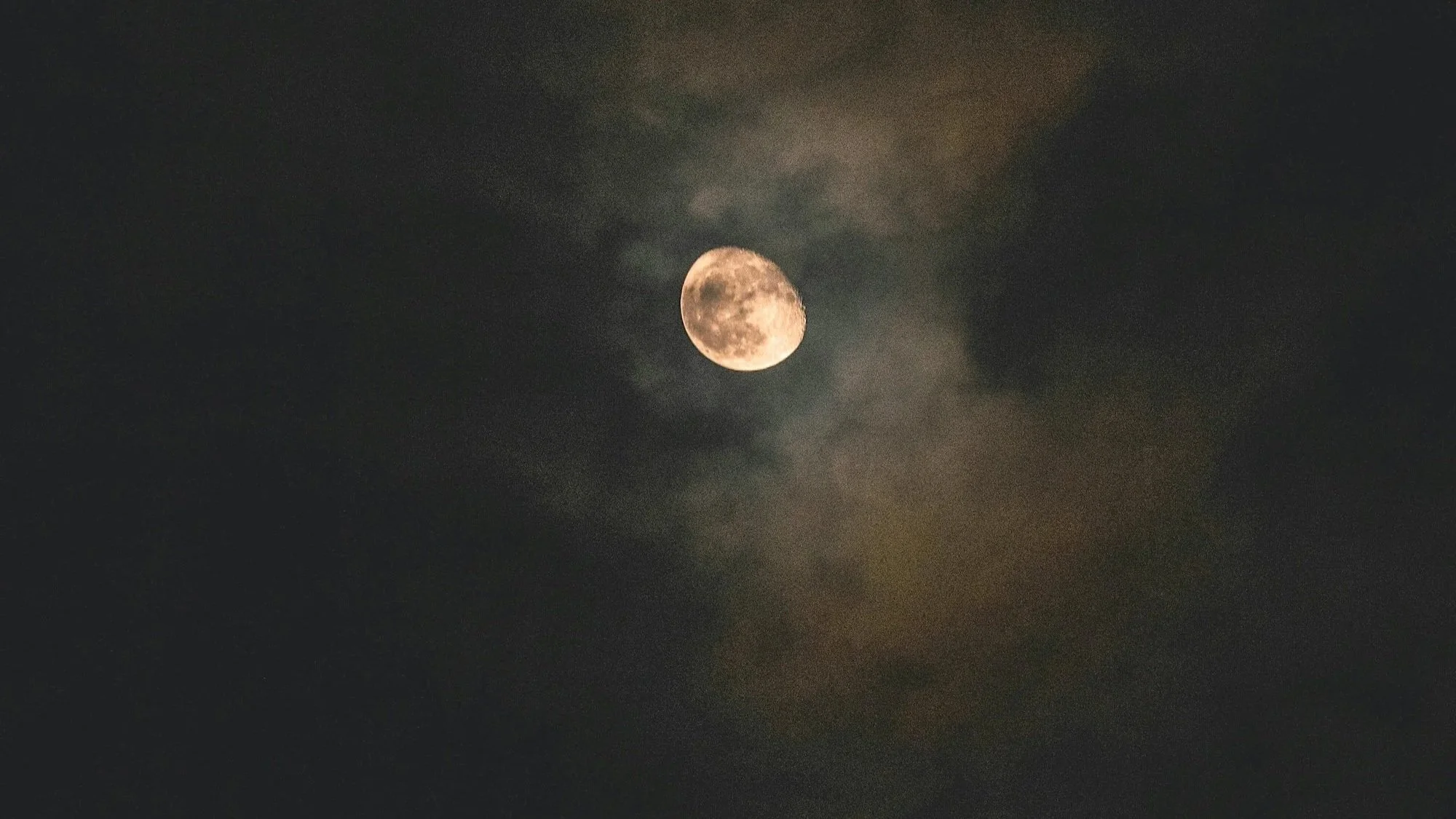
On a dark night,
Inflamed by love-longing -
O exquisite risk! -
Undetected I slipped away.
My house, at last, grown still.
Secure in the darkness,
I climbed the secret ladder in disguise -
O exquisite risk! -
Concealed by the darkness.
My house, at last, grown still.
That sweet night: a secret.
Nobody saw me;
I did not see a thing.
No other light, no other guide
Than the one burning in my heart.
This light led the way
More clearly than the risen sun
To where he was waiting for me
- The one I knew so intimately -
In a place where no one could find us.
O night, that guided me!
O night, sweeter than sunrise!
O night, that joined lover with Beloved!
Lover transformed in Beloved!
Upon my blossoming breast,
Which I cultivated just for him,
He drifted into sleep,
And while I caressed him,
A cedar breeze touched the air.
Wind blew down from the tower,
Parting the locks of his hair.
With his gentle hand
He wounded my neck
And all my senses were suspended.
I lost myself. Forgot myself.
I lay my face against the Beloved's face.
Everything fell away and I left myself behind,
Abandoning my cares
Among the lilies, forgotten.~ Saint John of the Cross (1542 - 1591)
Very few have read St. John’s poem—composed and memorized in captivity—that articulated his love affair with God alongside the “suspension of senses” that he described as the Dark Night of the Soul. I want to offer you this poem in its entirely so you can experience the sensuous delight he has in his romance with God, a counterintuitive context for the ominous-sounding dark night.
Many of us have gotten to a place in our lives where everything we knew of the presence of God seems to have vanished in a fog of longing and confusion. The old ideas, the old practices… none of it seems to work any more, and we wonder if God has somehow forgotten us. Or just left. The psychospiritual vertigo is profound, and John calls this the “dark night of sense,” framing it as an absolutely necessary experience to take us from childish infatuation with God to mature, abiding intimacy.
Is this comforting? Only if you’re in it! When you find yourself in this space, it is deeply heartening to understand the good intent behind it and the good future ahead.
In my experience, this first dark night (yes, unfortunately there is more than one) is a passage way—a painful birth canal—that bridges one era of the “religious self” to a new ear of the “spiritual self.” I don’t have space to talk about these dimensions in this post, but if you’re curious, sign up for the Awakening Retreat in March 2027!
Years later, an even more difficult transition arises in the spiritual journey that John describes as “dark night of the spirit.” In this season, it’s not only the sensations of God’s presence that lift, it’s even the concept of God itself that frays and then dissolves. Through this desolation John beckons us to trust that God is never closer to us than in this time of darkness and will in fact introduce us to a new, deeper, and truer experience of God on the other side. Our old images of God simply have to die in order to awaken to a more spacious and authentic reality of God.
This transition invites us to a new era yet: the “unitive self” where ego begins to loosen its grip and we find ourselves on the other side of “tribe” altogether. All people of all backgrounds, language, culture and even faith are our brothers and sisters. Even the inanimate created order is part of our family, as St. Francis intuited with his language of “brother sun” and “sister moon.”
So what is the “spiritual practice” here? If you’re not in the dark night right now, this is just a helpful way to understand where you have been likely before and where you will likely be again. If you are in the dark night right now, your practice is simply this: to hope, to persevere, and to love that which is not accessible in your awareness now. It will pass, and you will find your love affair with God renewed in all its priceless delight.